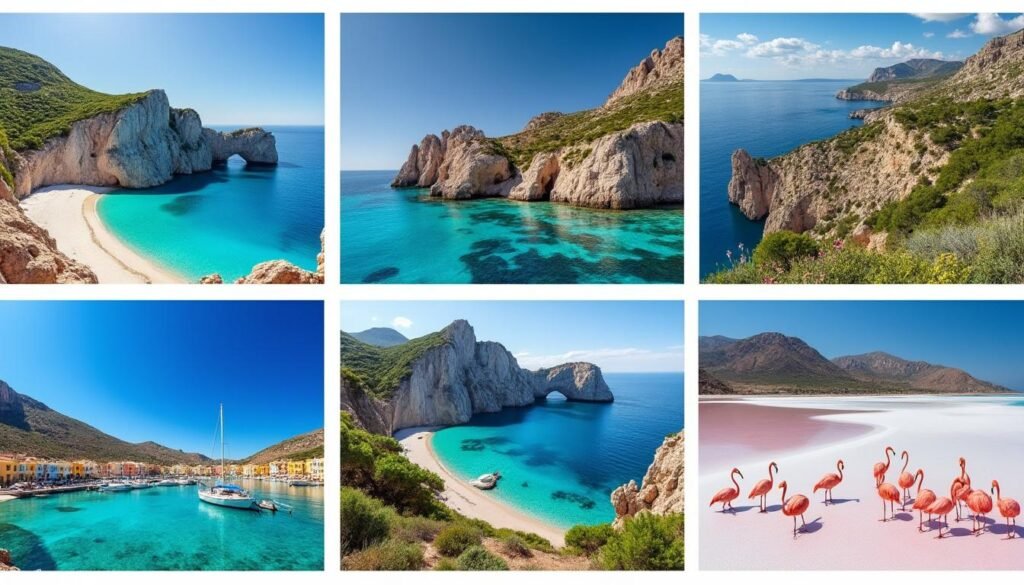

Le Nord de la Sardaigne, un kaléidoscope de paysages et de cultures, invite à une exploration qui va bien au-delà des cartes postales. Choisir sa destination sur cette côte de 300 kilomètres, entre les murailles médiévales d’Alghero à l’ouest et les eaux turquoise de La Maddalena au nord-est, est une véritable stratégie. Une décision judicieuse permet de maximiser le temps passé à découvrir plutôt qu’à rouler. Ce guide se propose de démystifier les options, en offrant une immersion profonde dans les nuances de chaque région, de l’éclat glamour de la Costa Smeralda aux trésors archéologiques silencieux, sans oublier les villages vibrants et les plages qui défient l’imagination. Loin des clichés, nous allons révéler les secrets logistiques et les pépites culturelles que seul un œil averti peut dénicher, transformant votre séjour en 2026 en une expérience authentique et inoubliable.
Le vent Maestrale, un acteur omniprésent, façonne l’expérience de la côte, protégeant parfois l’est tandis qu’il agite l’ouest, une donnée essentielle pour les amateurs de baignade en mer calme. Les trésors ne résident pas seulement dans les criques secrètes, mais aussi dans l’histoire millénaire des Nuraghes et des Domus de Janas, l’artisanat ancestral et une gastronomie qui raconte l’âme de l’île. Au fil de ces pages, vous trouverez des conseils pratiques pour louer une voiture et naviguer entre les aéroports d’Olbia et d’Alghero, ainsi que des suggestions d’activités à réserver pour optimiser chaque instant. Préparez-vous à une aventure où chaque choix d’hébergement, chaque excursion, chaque rencontre culinaire est une pièce du puzzle pour comprendre pourquoi le Nord de la Sardaigne continue de captiver et de surprendre.
Sardinia is a place where the sounds of an ancient world seem to echo in the silence of the morning. There are intense colours, secrets that peep out, legends, magical creatures half-man and half-beast, pagan rites, stone forests, fairies, and giants. Sardinia is a perfect balance between the uncontaminated Beauty our eyes can see and a world concealed beneath a veil too thin to remain hidden… Even in 2026, this feeling remains intact, perhaps even more alive:In this article, you will discover a land capable of letting your imagination fly like few others in the world, perhaps none at all.
We will talk about the sea and the best beaches of North Sardinia, its towns and villages, its breathtaking landscapes, the best places to visit from an architectural and artistic point of view, the signs of its millenary civilisation. Then we will get to know the typical handicrafts made by skilled hands, the museums that best represent the identity of this island, the excellence of the local food and wine. Finally, we will encounter perhaps the most intimate and authentic part of Sardinia and the Sardinian people: their festivals, traditions and events. Here, you will discover how magic merges with spirituality, how the past has never really passed, and how Sardinia embodies the very essence of Beauty, with all its mysteries, charm and contradictions.What to see and what to do in North Sardinia: the journey starts now, let’s go on this exciting adventure!
Visit Italy’s super travel guide: What to see and what to do in North Sardinia
Can’t wait to set off and explore all the wonders of the most fantastic island in the world? You’re in the right place then! Pack your bags, and above all open your mind to best experience this fantastic adventure discovering a magical land. So here’s what to see and what to do in North Sardinia, obviously with the super travel guide by Visit Italy. Enjoy the trip!
North Sardinia in 2026: a new balance to discover
In 2026, North Sardinia presents itself with a more mature spirit, determined to highlight what truly sets it apart.Along the coast, existing paths are being improved and more hidden trails are being restored, making it easier to reach spectacular headlands and secluded coves — viewpoints that once required more demanding routes.At the same time, the inland villages are experiencing a quiet yet meaningful revival: ancient stone houses are being restored, small squares are coming back to life, events and local traditions intertwine with new and contemporary forms of hospitality.In short, 2026 is a year in which North Sardinia chooses to reveal itself with simplicity and ease — no special effects, just the care of a magical landscape and an authentic welcome that invites you to slow down, look around, and let yourself be gently won over.
I come from an island that borders
to the North with the sky,
to the South with the sea,
to the East with the dawn
and the sunset to the West.
What to see in North Sardinia: the sea and all shades of blue
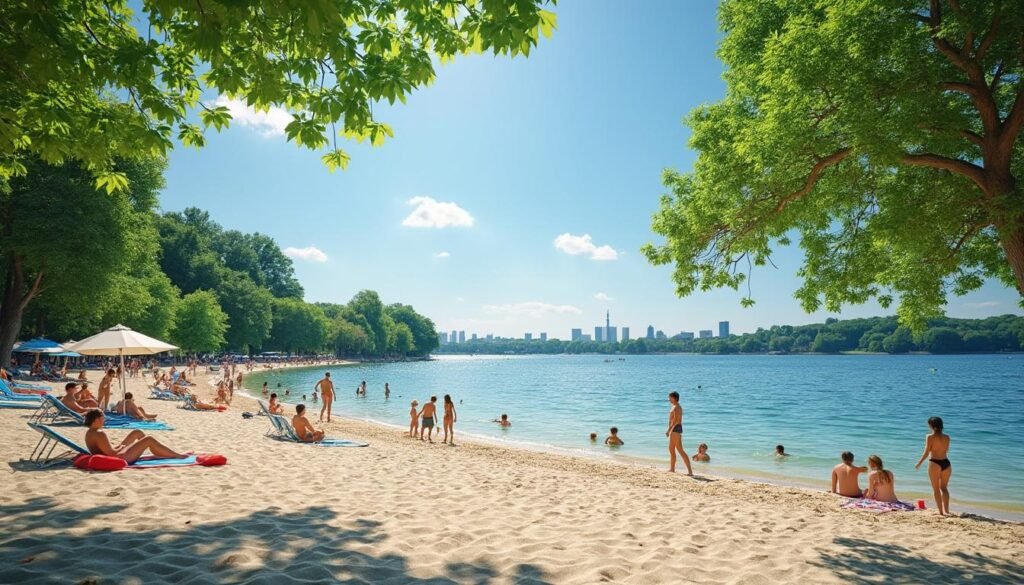
Hearing people talk about Sardinia and thinking about the sea is the most natural thing in the world. The North of the island offers some of the best beaches in Italy. A distinguishing feature of this island is the diversity of its beaches: one different from another to satisfy all tastes: from wide sandy beaches with fine sand, such as La Pelosa of Stintino or La Cinta di San Teodoro, to the red granite rocks of Costa Paradiso, to charming coves such as Cala Sarraina with its granite sand surrounded by pink rocks and Mediterranean scrub. From west to east, here are the best beaches on the North coast and the smaller islands that you should not miss during a summer holiday in Sardinia.
What to see in North Sardinia: the best beaches
La Pelosa beach Stintino
If you imagined gliding down from above like a breath of Mistral, the sea at La Pelosa of Stintino would look like a stretch painted with a fluorescent blue highlighter. This beach lies at the extreme north-western tip of the island, in the Gulf of Asinara, and is one of the most famous and award-winning in Europe. It is so beautiful that it looks like a painting. It has a light, soft, silver-coloured sand that slowly gives way to a Caribbean-hued sea that never seems to get deep. Behind it are dunes and junipers in front of the Isola Piana and the Asinara. It is separated from the open sea by its eternal symbol, the Pelosa tower (immediately opposite La Pelosetta beach) and the rugged dark promontory of Capo Falcone.
Costa Rossa and Costa Paradiso
Li Cossi Costa Paradiso
If you continue along the North coast, you arrive at the Costa Rossa, so called because of its granite cliffs. This is a still wild and little-explored part of Gallura compared to other more famous destinations, but it offers breathtaking views. Here, the Mistral wind has sculpted over the centuries a rugged landscape, never the same, where an emerald-coloured sea creeps among strangely shaped rocks. Suddenly, as we take the winding road to Santa Teresa di Gallura, we come to the promontory of Isola Rossa, a small island that turns the colour of fire at sunset, and the beautiful beach of Marinedda. Further on, the evocative scenery of Costa Paradiso where pink granite and dense Mediterranean vegetation frame thousands of small inlets and fjords that give way here and there to unforgettable coves such as Li Cossi and Li Tinnari. Just beyond Costa Paradiso, Cala Sarraina seems to be the perfect place to enjoy crystal-clear water and all the scents of the Mediterranean maquis blending with the smell of salt.
Capo Testa and Valle della Luna
Valle della Luna (Moon Valley)
Just a few kilometres from Santa Teresa di Gallura, Rena Majore has coarse, grainy sand and is popular with snorkelling enthusiasts. Continuing northwards, you reach the beautiful promontory of Capo Testa, where Cala Spinosa is located, a hidden paradise. Embedded in this promontory is a surreal place called Valle della Luna (namely, Moon Valley). Its huge rock formations, small coves, and caves make it resemble lunar soil under the moonlight. It has been inhabited by a hippie community since the 1960s and is a destination for travellers, artists, musicians and the curious in search of peace and serenity.
Costa Smeralda and San Teodoro
Cala Brandinchi San Teodoro
We have now reached the northernmost tip of the island. The Costa Smeralda, the north-eastern part of Sardinia, is known for its glittering nightlife, exclusive boutiques and luxury residences. Moreover, there are plenty of breathtakingly beautiful beaches in this area (Liscia Ruja, Capriccioli, the Spiaggia del Principe, etc.). Just a few minutes away is San Teodoro, the ideal location for a holiday at a more affordable price than the places frequented by the VIPs of the Costa Smeralda. The latter is the perfect destination for those seeking the beauty of the sea and the nightlife. The surrounding area offers wide beaches and coves surrounded by rocks, including La Cinta beach, Cala Brandinchi and Cala Girgolu.
The island of North Sardinia: Asinara, La Maddalena archipelago and Tavolara
Caprera Island
In addition to these famous beaches – some more easily accessible than other – there are many coves. Some of them are only known to the locals: here, peace and wonder reign supreme. You can be sure of one thing: the Sardinian Sea is never the same. As you go along the coast, you will notice that the landscapes, nature, colours and rock formations change… and you will see a number of smaller islands emerging from the water. These are true jewels where unspoilt nature dominates. Here, the sea is crystal clear and turquoise like few other places in the world.
Tavolara
Tavolara island
Tavolara is the island that dominates almost every view visible from the coast of San Teodoro. It is a 560-metre-high granite massif dotted with greenery that gives its name to the Tavolara-Punta Coda Cavallo marine protected area. The sea here is a dream for divers: you can dive into environments rich in biodiversity at Teddja Liscia and Secca del Papa. Here, you will come across the remains of ships and boats from every era. The island of Tavolara can be reached by ferry from Porto San Paolo.
Asinara
Asinara Island
Asinara is the island to the North of Sardinia, the extreme western tip of the gulf bearing the same name. It is also the tip of the whole island. You can appreciate it from La Pelosa beach. Asinara has been a National Park since 1997 and a marine protected area since 2002. Its particular history has preserved it as a world unto itself, both for its unspoilt landscape and for the survival of rare plant and animal species. Asinara has been isolated for over a century, especially since a maximum-security prison was set up there in 1975. With the institution of the park, it became visitable and is protected as a rare flower deserves. To reach it, you need to take one of the ferries that leave from Stintino or Porto Torres.
La Maddalena Archipelago
Cala Coticcio Caprera
The easternmost tip of Sardinia is home to the La Maddalena archipelago, which consists of more than 60 islands and islets. Here, the sea and sky seem to be competing to see who has the clearest blue, and the Mediterranean maquis accounts for about a third of all Sardinian flora and many rare species. Among these islands, the only one with an inhabited centre is La Maddalena, from which the archipelago takes its name, and which is the administrative seat of the National Park. The surrounding sea is part of the Marine Protected Area of the Cetacean Sanctuary, and the archipelago offers 180 kilometres of coastline with some of the most fascinating beaches in the Mediterranean. Most of them can only be reached by boat or on foot, so they remain protected and are the privilege of only a few people at a time. It is difficult to choose the most beautiful; still, they undoubtedly include Cala Coticcio on the island of Caprera, the Spiaggia Rosa of Budelli, Cala Corsara and Cala Soraya on the island of Spargi. An interesting note about Caprera: here is the home of Garibaldi, also known as “The Hero of Two Worlds”. He was one of the most famous personalities in Italian history who lived the last years of his life here. The Giuseppe Garibaldi National Memorial Museum is the most visited in Sardinia. To visit the archipelago there are ferries and boats departing from Palau.
What to see in North Sardinia: the cities of Sassari, Alghero, and Olbia
Olbia at sunset
Northern Sardinia has three major towns. Different in terms of location and history, each offers a unique experience that culminates in the traditional festivals. Locals have a deep connection with these events, an essential part of their identity. Here we suggest some ideas for visiting the three cities, while you will find a separate chapter about the most outstanding events in this area of the island.
Sassari
Piazza d’Italia Sassari
Sassari is one of the provincial capitals of Sardinia. It is the second largest town in Sardinia by population, and its territory is the fifth largest in Italy. Strolling through the city centre streets, you can admire beautiful palaces and places that are important to the Sassaresi, such as the La Marmora barracks (now a museum of the glorious Sassari Brigade) and Piazza d’Italia. Together with the Fontana di Rosello, the latter is one of the city’s symbols. Among the places of art and culture are the museum Museo Nazionale Sanna and the Cathedral of San Nicola di Bari, built in a mixture of architectural styles ranging from Gothic to Baroque and Classical.
Alghero and Olbia
Alghero Sardinia
Overlooking the sea, Alghero is one of the favourite tourist destinations in the North of the island. It is also known as the Spanish city of Sardinia because of the long period under Catalan rule, whose customs and traditions are still preserved. The Catalan style can be seen both in the houses that line the narrow alleyways of the historic centre and in the language: in fact, one in five inhabitants speaks Catalan, in the local variant. It is also the capital of the Coral Riviera, and Alghero’s red coral is recognised as one of the most precious in the Mediterranean, appreciated for its intense ruby colour.Olbia lies on the gulf bearing the same name. It gives access to Costa Smeralda and is one of the most dynamic and vital cities on the island, thanks to its port and international airport, making it the leading tourist destination in northern Sardinia. The town is home to places of historical and archaeological interest, including Roman ruins and Bronze Age remains such as nuraghi, sacred wells and tombs of the giants.
What to see in North Sardinia: villages of Castelsardo, Palau and Porto Cervo
Palau
If we were to imagine a tour including the unmissable stops in the area, three of them would certainly deserve a visit: Castelsardo, Palau and Porto Cervo. Because of their historical interest, attractions, or a unique romantic charm you can’t absolutely miss them.
Castelsardo
Castelsardo
Castelsardo is a village of views and landscapes. Here you can witness some of the most romantic sunsets in northern Sardinia. It rises on a promontory outstretched towards the Gulf of Asinara; it suddenly appears as a vision as you drive along the coastal road coming in from the West. The houses seem to climb the slope that ends with the Castello dei Doria, now home to the Museo dell’Intreccio Mediterraneo (a fascinating museum dedicated to the traditional art of weaving).
Palau and Porto Cervo
Porto Cervo
Palau is a village nestled in an inlet opposite the Maddalena Archipelago. The landscape is an alternating mix of clear waters and granite rocks shaped by atmospheric agents; during summer, its nights are filled with the joy of lights, events, and clubs. The port of Palau is one of the boarding points for the Archipelago de la Maddalena.Porto Cervo, finally, is an exclusive seaside village on the north-eastern edge of the island and is the realm of luxury holidays. It is the capital of Costa Smeralda and, in summer, becomes a glittering parade of yachts and celebrities. The Porto Cervo lifestyle consists of breathtaking beaches, shopping in prestigious boutiques from the Piazzetta delle Chiacchiere to the Sottopiazza, exclusive clubs, parties, and sporting events, especially golfing.
We are the uninterrupted realm of the mastic tree, of the waves rushing over ancient granite, of the dog rose, of the wind, of the immensity of the sea. We are an ancient land of long silences, wide and pure horizons, bleak plants, mountains burnt by the sun and by revenge. We are Sardinian.
Grazia Deledda
What to do in North Sardinia: check out the stunning nature of the island
Nature is the world’s greatest artist, and imagining Sardinia, it seems to have used all its fantasy. Sardinia is not only sea. It is beautiful every season including winter and autumn, from East to West and from North to South. Among the attractions and must-see places in the North, the weather over a long time created spectacular sights. Here, the wind blows hard, the sun beats strong, and the result is a strong nature, sometimes harsh, sometimes romantic, always capable of enchanting whoever is there to admire it.
Promontory of Capo Caccia
Escala del Cabiròl Capo Caccia
Looking out over the horizon from the town of Alghero, a long, flat shape rises from the sea. We are talking about the Capo Caccia promontory, with its 300-metre-high white cliffs overhanging the water. It is home to birds such as the griffon vulture, which can reach a wingspan of three metres. But the surprises of Capo Caccia do not end here. The sea has carved out caves inside the limestone giant over thousands of years. It looks like the fairytale scenarios of an underground world with stalactites, stalagmites, columns and a lake: the Grotta di Nettuno (Neptune’s Cave). You can get there by walking down the Escala del Cabiròl (654 steps) or by taking the shuttle bus from the port of Alghero and Cala Dragunara.
Valle della Luna in Aggius
Moon Valley Aggius
The Valle della Luna of Capo Testa is not the only one in Sardinia with this name. In the territory of Aggius, in the most intimate and deepest Gallura, there is another Valle della Luna (namely, Moon Valley), also known as Piana dei Grandi Sassi (or Plain of the big stones). Here you can listen to the wind blowing in total silence, caressing a landscape dotted with strangely shaped granite rocks, similar to the moon. This flat but uneven expanse has a great naturalistic value because it is a “unicum” comparable to a few other European areas.
What to see and what to do in North Sardinia: the silent rock guardians
They have been there since the dawn of time, sculpted by the impetuous and patient wind and rain. Sardinia is studded with strangely shaped rocks that look like animals, monsters, or people…and they have been observing their world for centuries, perhaps millennia. Here are the most famous rocks to visit in North Sardinia!
Elephant Rock in Castelsardo
Elephant Rock in Castelsardo
Along state road 134 in the Castelsardo area, there is a large, rust-coloured boulder about four metres high that has the shape of a seated elephant: the Roccia dell’Elefante (Elephant Rock). This natural monument also has a significant archaeological value because it houses two Domus de Janas (Fairy Houses), used for burial rituals thousands of years ago. In the Valle della Luna of Aggius, there is the Frate Incappucciato (which means Hooded Monk), also called Testa di Platone (namely, Plato’s Head), whose profile resembles a monk with a covered head.
Among the white boulders that glisten in the sun in the Valle della Luna of Capo Testa, just after Cala di l’Ea, is the Dinosaur Rock, which at 128 metres is the highest in the valley. Its summit is called Punta La Turri or The Skull.
Bear Rock in Palau
Bear Rock in Palau
Halfway between Santa Teresa and the Costa Smeralda is the most famous and suggestive of the Gallura rocks. From the top of the promontory of the same name, the Roccia dell’Orso (namely, the Bear Rock) dominates the landscape of Palau and the nearby islands of the La Maddalena Archipelago. It has been a natural monument of the Region of Sardinia since 1993.In the southern part of the island of La Maddalena, a huge, rounded octopus head emerges from the transparency of the sea. This small, private beach of fine sand is called Testa del Polpo beach (Octopus Head beach).A strange creature emerges from the turquoise waters of Cala Girgolu, in the territory of Loiri Porto San Paolo. It is a granite turtle, one of the most photographed rocks in Sardinia (unfortunately damaged several times by uncivilised people), which has made the beach famous with the name Spiaggia della Tartaruga (namely, Turtle Beach).
North Sardinia’s charming architecture and art: between sacred and profane
Santissima Trinità di Saccargia
Let’s move on to the works created by man after those sculpted by nature: churches, castles, mines surrounded by stories and legends. We are about to discover the architecture of North Sardinia.
Santissima Trinità di Saccargia
About 20 minutes from Sassari, near the 131 state road, a tall bell tower stands out in the middle of a green valley in the Codrongianos area. This is the Basilica of the Santissima Trinità di Saccargia, the most famous Romanesque church in Sardinia. It is renowned for its two-colour pattern of horizontal stripes made of white limestone and dark basalt stone. The church was consecrated in 1116 and, next to it, we can admire the ruins of the monastery and cloister. This area has always been considered sacred and the echo of ancient cults.
Doria Castle in Chiaramonti
There are many castles in Sardinia. One of the most impressive in the North is the Doria Castle in Chiaramonti in the Sassari area. Its ruins stand on a hill 465 metres above sea level, overlooking the entire Anglona valley and, on clear days, the coasts of Corsica.
The abandoned mines in Argentiera
The Argentiera is located halfway between Alghero, Stintino and Porto Torres. Here, the ruins of the old lead-argent mine and the ghost village overlook a grey beach and a bluer-than-usual sea. Here, you will experience the silence of a place frozen in time. Once, this was the most productive mining settlement in the North of the island. Now, it is the “Open Mar-Miniera Argentiera”, the first open-air mining museum, part of Sardinia’s geo-mineral park and a UNESCO World Heritage Site.
The strange thing is that a country of rock, instead of giving a sense of reality, seems to be made of the impalpable fabric of the imagination.
Guido Piovene
Sardinia: the land of giants, fairies and nuraghi
Nuraghe of Santu Antine
Among the places to visit in Sardinia, we must certainly include all those linked to its most ancient history. Imagine a people who gave life to civilisation thousands of years ago with unique characteristics, still a memorable part of the island’s identity. In the midst of the Sardinian countryside, strange constructions often appear suddenly, austere, massive and silent.
Nuraghi in North Sardinia
Nuraghe Santu Antine
Nuraghi are mysterious towers with a truncated cone shape built with huge dry-stone boulders. Their function is still unclear (palace, fortress, astronomical observatory, temple), although it probably varied according to their position and environmental context. Today, there are more than seven thousand scattered throughout the island, some of which can be visited, others in ruins.Among the most beautiful ones in northern Sardinia, we can find the Nuragic complex of Palmavera in Alghero, the Nuraghe Majori a few kilometres from Tempio Pausania, considered the most beautiful in Gallura, and the nuraghe of Santu Antine in Torralba dating back to the 15th century BC. The latter rises in the so-called “Valle dei Nuraghi” (Valley of the Nuraghi) and is known as “Sa Domu de su Re” (The King’s House) for its majesty and because it is thought to have been the home of the tribal chief. None of all the known Sardinian nuraghi equals its level of elaboration and refinement.
Tomb of the Giants and Domus de Janas
Tomb of the Giants of Su Mont’e s’Abe
As we said, Sardinia is the land of giants and fairies. Among the most important signs of its past, popular imagination has given a magical meaning over the centuries. The Tombs of the Giants are colossal tombs from the Nuragic period found throughout most of the island. Their plan resembles a bull’s snout, an animal that symbolises male divinity, strength and power. They are immediately recognisable because the outer facade is made up of stones driven vertically into the earth and arranged in a semicircle.The mystery surrounding these constructions is due to the enormous bones found inside them…the bones of giants. There are three in the Arzachena area of the Costa Smeralda: Coddu Vecchiu, Capichera and Li Lolghi. Three kilometres from Calangianus, in the province of Sassari, there is the Pascaredda Tomb of the Giants, and in Olbia the tomb of Su Mont’e s’Abe.
The Domus de Janas (namely, the Fairy Houses) are even more ancient: they belong to the pre-Nuragic civilisation. Popular tradition held that they were the dwellings of small legendary creatures always intent on precious sewing fabrics with their golden looms while singing sweet melodies. Actually, they are tombs dug into the rock (about 3500 in the whole of Sardinia) in such a way as to reproduce the dwellings of the living. The Janas, however, are one of the most significant magical creatures in Sardinian culture. It is said that at nightfall, near their homes, you can still hear the sound of the looms on which they weave tirelessly.Among the fairy houses in North Sardinia, in the village of Sedini near Castelsardo, the Domus de Janas “La Rocca” is definitely worth a visit. Other sites include S’Incantu, a few kilometres from Alghero, dating from between 3200 and 2600 BC and decorated with all the typical motifs of the pre-Nuragic age, and the necropolis of Sant’Andrea Priu in Logudoro.
Stone stories and temples 5000 years old
Dolmen
The history of this small world in the middle of the sea seems to be engraved in stone. It is just like the pages of a book. In the territory of Martis, in Anglona, there is a millenary petrified forest, unique in its genre: the Carrucana forest, a true mystery of nature. Among the most typical expressions of megalithism in Sardinia are constructions such as dolmens and menhirs. Among these, the dolmen Sa Coveccada, in the municipality of Mores in the province of Sassari, the largest on the island, is worth a visit. Our journey through Sardinia’s oldest history concludes with the Monte d’Accoddi altar temple, an unparalleled monument in the Mediterranean basin. It dates back five thousand years and is a unique ziggurat in Europe, identical to Mesopotamian temples of the same era, although it has no direct connection. It is located near the “old” 131 state road near Porto Torres and was brought to light in the mid-20th century by excavating a small hill in the middle of a plain…
What to do in North Sardinia: find out the quality of local craftsmanship
Sardinian filigree jewel
The complex heritage of Sardinian handicrafts embodies a historical identity that goes back to prehistoric times. It is the expression of a culture handed down over the centuries, a true folk art with clear elements that distinguish it from all others in its techniques, recurrent designs and figures, motifs, and colours.
The filigree: folklore, magic, and tradition
Sardinian wedding ring
As we have said, Sardinian culture is rich in magical symbolism. Legend has it that, in their dwellings, the Janas spent their time weaving gold and silver threads with precious stones. From their hands came splendid and magical jewellery (sas prendas), which thus took on a symbolic as well as ornamental function, a value that has remained intact to this day.The technique of Sardinian filigree, honeycombing and granulation are ancient craft skills with which typical Sardinian jewellery is created. Among the most famous and significant ones are the Fede Sarda (Sardinian wedding ring), the button and Su Coccu. The filigree, with its very fine threads, gives birth to ethereal and light creations, the Sardinian wedding ring is a symbol of a bond of love; buttons were handed down from mother to daughter and were a symbol of good luck and fertility. Su Coccu is a very ancient good luck charm that can defend the person wearing it from the evil eye, negative energies and influences. These objects are made all over Sardinia, we see them adorning traditional clothes, and they can be bought in handicraft shops, especially in tourist centres.
Pattada knives
From the earliest times, the Sardinian people have been skilled forgers dedicated to hunting and warfare. The knife has always been part of the traditional accessories of these people, as the bronzetti (bronze statuettes typical of the Nuragic age) testify. Moreover, when the girl accepted the ring as a gift in engagement rituals, she would reciprocate by giving her betrothed a knife with a horn handle. The most famous switchblade on the island is called resolza or arresoja and the most important centre for its production is in Pattada. The typical pattadese (as it is called) has a mouflon horn handle, while the blade can be made of steel or damask. Curiosity about it: when it was given as a sign of friendship, it was given holding it by the blade to offer the handle.
Castelsardo baskets
Castelsardo is famous worldwide for its handmade baskets, made using weaving techniques handed down from generation to generation. Still today, in the medieval village streets, you can meet women who spend hours creating baskets with colourful decorations. Initially, people used dwarf palms, but today they are replaced by raffia as the palm tree has become a protected species. Typical of this town are baskets and corbules (truncated cone-shaped objects).
Carpets of Aggius and Nule
Carpets of Aggius and Nule
The traditional Aggius carpet is the greatest expression of textile craftsmanship in northern Sardinia, an art handed down by women. It is made from wool, linen, and cotton to create a perfect succession of weaves, coloured lines, shapes maintained over the centuries and chromatic solid contrasts. Another major centre for handcrafted carpets is Nule. The carpets of Nule have an ancient tradition that has been handed down from mother to daughter: they are double-faced carpets with a very dense fabric with precise designs and colour combinations.
Red coral from Alghero
The king of Alghero’s production is coral, an ancient practice that dates back to the Ancient Romans. The Red Coral needs special living conditions, which, here on the Coral Riviera, give rise to one of the finest qualities in the whole Mediterranean, famous for its intense ruby colour. In the old town centre, you will find shops where you can buy necklaces, bracelets and earrings made from this local excellence.
Gallura cork
Cork is considered the “soft gold of Sardinia” and has been used for more than 3,000 years to produce a variety of objects, from trays, chopping boards and corks to more contemporary jewellery, clothing, bags and clutch bags. The advantages of cork? It is environmentally friendly, stain-resistant, waterproof, soft, malleable, and does not spoil. The village of Calangianus in Gallura is one of the world’s largest cork producers.
North Sardinia museums: crafts, ancient customs, and history
Doria Castle, Castelsardo, home of the Museum of Mediterranean Interweaving
Of all the museums you can visit in the North of the island, we have selected the best representing the identity of the Sardinian people.
Culter Museum in Pattada. The history of the town of Pattada has been linked to knives production since the second millennium BC. The International Knife Museum has two main sections, one dedicated to the origins of the Sardinian knife and the other to international knives. MIM – Museo dell’Intreccio Mediterraneo in Castelsardo (or Mediterranean Interweaving Museum of Castelsardo). It is located inside the medieval Doria Castle, which dominates the village below. On display are artefacts made by weaving vegetable fibres from Castelsardo itself, Sardinia, and the entire Mediterranean area. Coral Museum in Alghero. The Coral Museum is located in an Art Nouveau villa. It tells a very important piece of Alghero’s identity through a fascinating discovery journey of the Mediterranean’s red gold: the Corallium Rubrum. The town is also home to the Aquarium Rubrum, the first live coral aquarium in Italy open to the public where you can admire live corals.
Oliva Carta Cannas Ethnographic Museum and Museum of Banditry in Aggius. The Oliva Carta Cannas Ethnographic Museum is an exciting dive into the culture and traditions of Gallura and Sardinia and also houses the “Permanent Exhibition of Aggese Carpet”. As for the Museum of Banditry, the town of Aggius was the fulcrum of Gallura banditry for about three centuries, from the mid-sixteenth century to the mid-nineteenth century. The four rooms display interesting documentation and objects worth seeing.Museum of the Valley of the Nuraghi of Logudoro-Meilogu of Torralba. It houses a large part of the artefacts found at the Nuragic complex of Santu Antine. It illustrates its construction characteristics, offering a significant testimony to the culture of the Nuragic civilisation.Galluras Ethnographic Museum – “the museum of the Femina Agabbadora” in Luras. Among the many legendary figures of Sardinian folklore, the Accabbadora is one of the most fascinating, mysterious, and enigmatic. Sa femina agabbadora was a woman who brought death to the terminally ill and was called by their families to put an end to their suffering. A sort of archaic euthanasia practised in small rural villages where families were too poor to care for a loved one in that condition. The first ethnographic museum in Gallura is a private project in which the typical environments of Gallura’s civilisation have been faithfully reconstructed.
The delicacies of local food and wine
Sardinian myrtle
Sardinia is a land with a very long agro-pastoral and maritime tradition. Here, family, hospitality and conviviality are among the most important values. Moments spent with relatives and friends are significant, and the greatest protagonist on these occasions is food. The island’s cuisine comprises famous traditional dishes from all over the region and more local delicacies to be tasted in homes, restaurants that respect the original traditional recipes, or at most succulent country festivals in Italy.
The typical dishes of North Sardinia
Lobster Catalan style
Malloreddus (a typical pasta), porcetto (or tiny piglet) and seadas carry the Sardinian flag everywhere. On a visit to Gallura, you should try zuppa gallurese (a poor man’s dish of bread, cheese and sheep’s broth) and chiusoni (gnocchi typical of the area). In Sassari, traditional dishes include snails, “monzette” (a variety of snails), favata alla sassarese (a first course with broad beans) and zimino (grilled beef offal). In Alghero, try the lobster catalan and the octopus agliata, and in Castelsardo, spaghetti al mirto (made with dried, crushed myrtle sautéed with onion). Other popular products of the area are artichokes, in particular the Sardinian spiny artichoke.
The wines from North Sardinia
The best thing to combine with a good dish is good wine. In the territory of Sassari, the Romangia area is made up of valleys and hills dotted with small vineyards mixed with olive groves. Here, one of the oldest terroirs in Italy produces wines such as Moscato di Sorso-Sennori. Torbato is a vine found only in Alghero and Cagnulari, indigenous to Sardinia, grown on the hills south of Sassari. However, the island’s most representative vine, along with Cannonau, is Vermentino, which is mainly typical of the north. Vermentino di Gallura DOCG is a real delight.
What to do in North Sardinia: experience the faith of sacred events
Sardinia’s people are linked to magic and spirituality. In this small world in the middle of the sea, the sacred and the profane are often mixed. It is a unique melting pot: Christian and pagan, past and present, fear and wonder. Events and traditions of Sardinia are the moments when the more magical and spiritual side explodes with all its force and takes possession of everyday life.The undoubtedly boasts some of the most beautiful folklore events in Italy. If we want to get to know it, we cannot ignore its customs and beliefs’ importance for the Sardinians. Of all the beautiful experiences the island has to offer, these are certainly among the most exciting.In Sassari, on the eve of Our Lady of the Assumption feast on 15 August, there is the “Faradda di li Candareri” (or the march of the candlesticks). This is a festival at least five centuries old, deeply felt by the Sassaresi who honour the vow made to the Virgin who saved the city from the plague. Every year, about 100,000 visitors worldwide come here to see the procession. Eleven large wooden candles are carried on the shoulders of the people to the Church of Santa Maria di Betlem. Since 2013, the Faradda has been part of the Italian large shoulder-borne processional structures, intangible cultural heritage of UNESCO. The candlesticks are carried by representatives of the twelve gremi (the city’s arts and crafts associations). Along the route, the bearers make the candlesticks perform evolutions in auspicious dance.
The rites of Holy Week are also very popular with the island’s inhabitants, with evocative ceremonies rooted in medieval tradition. In Alghero and Castelsardo, the procession of the mysteries (S’Iscravamentu or Desclavament) is celebrated. Lu Lunissanti in Castelsardo is one of the oldest and best-known Holy Week rites in Sardinia, while Alghero maintains strong links with Catalonia. Christmas here in Sardinia also has a different flavour. In the Sardinian Christmas tradition, the pastoral culture and the importance to the family are evident.
What to do in North Sardinia: experience the charm of folklore
Sardinian traditional dress
The Sardinian island boasts some of Italy’s most famous festivals and music events, costume parades and horse races, and much more. Sassari is also home to the island’s largest secular event: the Cavalcata Sarda, which takes place on the penultimate Sunday in May. Every year, over three thousand costumes representing municipalities from all over Sardinia offer an unforgettable spectacle. In the morning, the participants dressed in the traditional dress of their country and the knights parade through the streets of the city centre, paying tribute to the spectators and the authorities with typical culinary products. The procession is closed by over three hundred knights from all over Sardinia. In the early afternoon, it is the turn of the pariglie, adrenaline-filled displays of skill in which the bravest Sardinian riders put on a show with acrobatics on the horses running at the Pinna racetrack. The event also comprises the music of the island’s folk groups, who perform in the review of traditional Sardinian songs and dances. So, after a day that is impossible to forget, the sounds of launeddas, organittu, accordion and “cantu a tenores” (tenores song, among the UNESCO “Oral and Intangible Heritage of Humanity”) close the festival, in the setting of Piazza d’Italia.Douglas Goldring, describing Gallura, said: «It is a strange, desolate, strangely exciting region, this Gallura, wild, almost depopulated, and yet not without a singular charm». It is said that spring is the best season to visit this part of Sardinia: the colours are more vibrant, the scents are more intense, and the flavours are more genuine. The customs and traditions here are different from the rest of the island, and Primavera in Gallura (namely: spring in Gallura) was created to safeguard this cultural and historical heritage. One of the most important events in Sardinia is undoubtedly it.
What to see and what to do in North Sardinia: check out Salude & Trigu
Sardinian Flag
Here it is. The Quattro Mori (the Four Moors) flag waves proudly in the sky as if to say goodbye to the day that is leaving. Our journey of discovery through North Sardinia is over. A written text will never be enough to get to know it. There are no words that can make you feel the scent of juniper and mastic, the sound of the sea breaking on the rocks, the sound of an accordion, the chill of the Mistral on your skin or the roughness of the granite rocks. But above all, there are no words that can describe the sound of the silence of the Sardinian valleys, or that can convey the sense of reverence and respect that one feels when stopping to observe the landscapes of an island where the land speaks a magical and ancient language that grips the heart.The most authentic way to enjoy all this on your next trip to North Sardinia? We suggest you always keep an eye on the beautiful Salude & Trigu program of the Sassari’s Chamber of Commerce: a true container of events and culture to transform this magical land into a wonderful experience to remember forever.
Discover more about Salute & Trigu events
This content includes commercial partnerships.
En bref
- Strategic Base Selection: Northern Sardinia’s 300 km coastline offers diverse experiences, from Alghero’s medieval charm to La Maddalena’s turquoise straits. Choosing the right base is crucial to avoid excessive driving and maximize discovery.
- The Maestrale Wind: This dominant northwest wind significantly impacts coastal conditions. The northeast (Costa Smeralda, La Maddalena) often provides calmer seas compared to the western coast (Stintino, Alghero) when the Maestrale is active.
- Luxury vs. Authenticity: The Costa Smeralda embodies glamour and high-end luxury, while areas like La Maddalena Archipelago offer authentic island life and pristine nature. San Teodoro stands out for its excellent value beaches.
- Cultural Immersion: Beyond beaches, Northern Sardinia boasts a rich history with Nuraghi, Domus de Janas, Tombs of the Giants, and ancient temples like Monte d’Accoddi, inviting deeper cultural exploration.
- Local Craftsmanship: The island’s identity is deeply rooted in its traditional crafts, including Sardinian filigree jewelry (Fede Sarda, Su Coccu), Pattada knives, Castelsardo baskets, Aggius and Nule carpets, Alghero red coral, and Gallura cork.
- Gastronomic Delights: Northern Sardinian cuisine offers unique flavors such as zuppa gallurese, Alghero’s Catalan lobster, and Vermentino di Gallura DOCG wine, reflecting a long agro-pastoral and maritime heritage.
- Vibrant Festivals: Experience the island’s spiritual and cultural heart through events like the “Faradda di li Candareri” in Sassari, the “Cavalcata Sarda,” and the evocative Holy Week rites.
- Car Rental Essential: A rental car is almost indispensable for exploring the diverse landscapes and remote beaches of Northern Sardinia, with early booking advised, especially for peak season.
- Key Towns and Villages: Major cities like Sassari, Alghero, and Olbia offer unique historical and cultural experiences, while charming villages like Castelsardo, Palau, and Porto Cervo provide distinct regional flavors.
- La Pelosa Reservation System: Since 2021, a mandatory timed-entry reservation system is in place for La Pelosa beach in Stintino, requiring booking at least 48 hours in advance during peak season to protect its fragile ecosystem.
Choisir son camp de base : Où séjourner en Sardaigne du Nord pour un voyage idéal ?
La Sardaigne du Nord se déploie comme une mosaïque de paysages et d’ambiances, rendant le choix de son point de chute aussi crucial qu’excitant. Imaginez passer vos vacances à sillonner les routes plutôt qu’à vous prélasser sur des plages idylliques simplement parce que votre hébergement est mal situé. C’est le défi que nous relevons ici, en vous offrant une analyse détaillée des différentes zones. Que vous recherchiez le luxe ostentatoire, l’authenticité d’un village de pêcheurs ou le calme d’une retraite naturelle, il existe un lieu parfait pour vous. Prenez en compte le célèbre vent Maestrale, un élément naturel à ne pas négliger, qui peut influencer l’état de la mer et, par conséquent, le choix de votre côte préférée pour la baignade.
La Côte d’Émeraude : L’Éclat du Luxe et du Glamour
La Costa Smeralda n’est plus à présenter, mais sa réalité est souvent plus nuancée que les images. Acquise et développée par le Prince Aga Khan au début des années 1960, cette étendue de 55 kilomètres de littoral nord-est est devenue une destination de luxe mondialement reconnue. Englobant Porto Cervo, Porto Rotondo et Baja Sardinia, la région est un concentré de beauté où la couleur de la mer est véritablement unique en Méditerranée. Si votre budget le permet, c’est l’endroit idéal pour une expérience haut de gamme.
Cependant, pour ceux qui cherchent un rapport qualité-prix optimal, juillet et août peuvent être excessifs, avec des prix élevés, des plages bondées et un stationnement chaotique à Porto Cervo. Les mois de mai, juin et septembre offrent une expérience plus sereine et plus avantageuse. Parmi les plages incontournables, ne manquez pas Spiaggia del Principe et Capriccioli, des joyaux accessibles après une courte distance en voiture. Pour une immersion plus complète, les guides dédiés à la Costa Smeralda et à Porto Cervo vous apporteront toutes les précisions nécessaires.
L’Archipel de La Maddalena : L’Évasion Naturelle et Authentique
L’Archipel de La Maddalena, un parc national composé de sept îles principales et de dizaines d’îlots, est un sanctuaire de biodiversité. Ses eaux figurent parmi les plus protégées de la Méditerranée, et ses plus belles plages, comme Cala Coticcio sur Caprera ou les sables roses de Budelli, sont accessibles uniquement par bateau. C’est précisément là que réside son attrait : une expérience d’exploration maritime pure et simple.
Séjourner ici offre un rythme de vie différent de la Costa Smeralda. La ville de La Maddalena, la seule habitée de l’archipel, vibre d’une vie locale authentique : marchés matinaux, restaurants familiaux, enfants à vélo. C’est la Sardaigne telle qu’elle est, loin des décors artificiels. La logistique est simple : un ferry depuis Palau vous y conduit en 20 minutes, avec des départs fréquents en été. Une fois sur l’île, oubliez la voiture ; un vélo ou un scooter suffira pour vous déplacer et découvrir ses trésors cachés.
Santa Teresa Gallura : Le Charme du Nord Extrême
Située à la pointe nord de la Sardaigne, à seulement 12 kilomètres des côtes corses, Santa Teresa Gallura est une base d’exploration souvent sous-estimée. Son avantage réside dans la parfaite harmonie entre une ville dynamique, de belles plages, un port actif et un accès privilégié à l’Archipel de La Maddalena. La plage de Rena Bianca, par exemple, est à quelques pas du centre-ville, et le ferry pour la Corse part directement du port.
Cette localité est également plus abordable que la Costa Smeralda pour les restaurants, cafés et hébergements, en dehors de la haute saison. Les soirées y sont animées, et vous n’êtes pas dépendant d’une navette d’hôtel pour dîner. Comptez environ 1 heure 15 minutes de route depuis l’aéroport d’Olbia, un détail à considérer pour votre arrivée. C’est une excellente option pour les familles ou les voyageurs indépendants cherchant une expérience authentique sans les prix exorbitants.
Palau : La Porte vers l’Archipel et ses Merveilles
Palau est la ville d’où partent les ferries pour La Maddalena. Pour ceux qui envisagent plusieurs excursions quotidiennes vers l’archipel, y séjourner est une option plus pratique et souvent plus économique que de loger sur l’île principale. C’est une petite ville, plus décontractée que Santa Teresa Gallura, avec un agréable front de mer, de bons restaurants de fruits de mer et des paysages de granit caractéristiques de la Gallura.
Située à environ 30 minutes de Porto Cervo en voiture et 45 minutes de l’aéroport d’Olbia, Palau offre une base stratégique pour explorer à la fois la Costa Smeralda et l’Archipel, sans s’engager dans les tarifs premium de ces deux zones. C’est un excellent compromis pour combiner différentes facettes de la Sardaigne du Nord et profiter de la flexibilité des excursions maritimes.
Alghero : Culture, Histoire et Plages à l’Occidentale
Alghero est sans doute la destination la plus complète du nord-ouest de la Sardaigne. Son centre historique, d’influence catalane, est niché derrière des remparts calcaires du XIVe siècle, et la ville regorge de quelques-uns des meilleurs restaurants de fruits de mer de l’île. Trois zones de plages de qualité se trouvent à moins de 10 minutes en voiture, et l’aéroport de Fertilia est remarquablement proche, à environ 10 minutes du centre.
Une fois sur place, le centre historique est entièrement piétonnier. Une voiture devient utile pour les excursions, comme la Grotte de Neptune au Capo Caccia, Stintino ou la ville médiévale de Bosa, toutes à moins d’une heure de route. Il est important de noter qu’Alghero, exposée au Maestrale, peut voir ses plages occidentales devenir agitées lorsque le vent souffle fort, et la Grotte de Neptune pourrait être fermée. Pour plus de détails sur cette ville fascinante, consultez un guide détaillé d’Alghero.
Stintino : La Pelosa, un Paradis à Préserver
Stintino doit sa renommée principalement à la plage de La Pelosa, ce lieu emblématique aux eaux turquoise peu profondes et au sable blanc, dominé par une tour aragonaise. La ressemblance avec les Caraïbes est frappante, en termes de qualité de l’eau. Mais avant de réserver, une information cruciale : depuis 2021, La Pelosa est soumise à un système de réservation obligatoire avec des créneaux horaires et un nombre limité de visiteurs journaliers. En juillet et août, il est impératif de réserver en ligne au moins 48 heures à l’avance pour éviter de se voir refuser l’accès. Ce système est vital pour protéger ce site naturel exceptionnel.
Le village de Stintino, ancien port de pêche, est compact et plus tranquille que la Costa Smeralda. Une voiture est essentielle ici, la péninsule étant relativement isolée, à 45 minutes de l’aéroport d’Alghero. C’est également le point de départ des excursions en bateau vers le Parc National d’Asinara. Stintino offre une expérience balnéaire unique, à condition d’anticiper la réservation pour La Pelosa.
Castelsardo : L’Écrin Médiéval sur la Mer
Castelsardo ne se présente pas d’emblée comme une destination balnéaire, mais plutôt comme une forteresse surgissant d’un rocher au-dessus de la mer. Et c’est précisément ce qui fait son charme. La citadelle médiévale, érigée au XIIe siècle par la famille Doria de Gênes, descend en ruelles étroites jusqu’à un port de pêche actif. Le tressage de paniers est l’artisanat traditionnel local, visible partout, dans les boutiques comme dans les ateliers familiaux.
En tant que base pour explorer le nord de la Sardaigne, Castelsardo est une option pertinente. Elle est à peu près équidistante d’Alghero (40 minutes), Sassari (30 minutes) et du début de la Costa Smeralda. La plage de Lu Bagnu est à seulement cinq minutes en voiture, et le célèbre Rocher de l’Éléphant, une formation naturelle très photographiée, se trouve à dix minutes. Les prix des hébergements y sont généralement plus bas que dans les stations balnéaires plus huppées, mais une voiture est indispensable pour profiter pleinement de la région.
San Teodoro : Le Meilleur Rapport Qualité-Prix du Nord-Est
C’est un secret bien gardé des locaux que les touristes commencent à découvrir : San Teodoro abrite certaines des plus belles plages du nord-est de la Sardaigne, à une fraction des prix de la Costa Smeralda. Cala Brandinchi est régulièrement classée parmi les plus belles plages d’Italie. La Cinta, une lagune de 3 kilomètres de sable pâle entre la mer et un lac d’eau douce, offre un cadre exceptionnel, tandis qu’Isuledda est une crique plus tranquille, prisée des initiés.
La ville est située à seulement 20 minutes de l’aéroport d’Olbia, offrant l’un des transferts les plus rapides vers une zone balnéaire du nord. San Teodoro bénéficie d’une scène estivale animée, de bons restaurants et la zone marine protégée de Tavolara est visible depuis le rivage. Si elle peut accueillir des établissements de luxe comme le Baglioni Resort Sardinia, elle offre avant tout un excellent rapport qualité-prix, ce qui en fait une option de choix pour les familles et les nouveaux visiteurs dans le nord.
Expériences Incontournables : Que faire et que voir dans le Nord Sarde ?
Une fois votre base choisie, l’aventure ne fait que commencer. La Sardaigne du Nord, avec sa saison intense et courte, regorge d’expériences qui se réservent rapidement. Anticiper est la clé pour ne rien manquer des découvertes qui feront de votre voyage un souvenir impérissable. Des eaux cristallines de l’archipel de La Maddalena aux mystères des sites nuragiques, chaque recoin de l’île promet son lot de surprises.
Aventures Marines : Excursions et Plongées en Eaux Cristallines
Les eaux turquoises de la Sardaigne du Nord appellent à l’exploration. Plusieurs tours en bateau offrent une introduction classique à la beauté marine de l’île. L’excursion d’une journée complète dans l’Archipel de La Maddalena, au départ du port de Palau, est un incontournable. Elle vous fera découvrir les îles principales, comme la plage de sable rose de Budelli, les criques de granit de Spargi et les eaux limpides autour de l’île de Santa Maria. Avec des arrêts baignade et des commentaires guidés, c’est l’excursion la plus réservée de la côte nord, attestée par plus de 1169 avis vérifiés sur Viator.
Pour ceux qui préfèrent une expérience plus intime et un rythme plus lent, une sortie en voilier à la journée dans l’archipel de La Maddalena est une excellente alternative. À bord d’un voilier avec équipage, vous explorerez les sept îles du parc national, avec équipement de snorkeling et paddleboards inclus. Un déjeuner et un apéritif sont servis à bord, offrant plus de temps dans l’eau et des arrêts plus nombreux que les tours classiques. Notée 4.9 sur 5 avec 415 avis, cette option est parfaite pour les amoureux de la mer. Dans le même esprit, une croisière de quatre heures le long de la Costa Smeralda à bord d’un gozzo traditionnel sarde vous mènera à des criques cachées, avec deux arrêts snorkeling et un apéritif au coucher du soleil. C’est la manière la plus atmosphérique de découvrir la Côte d’Émeraude sans les prix de Porto Cervo.
Du côté ouest, une excursion en bateau rapide d’une demi-journée depuis Stintino vers le Parc National d’Asinara promet trois arrêts baignade dans des criques protégées, inaccessibles autrement. Avec un apéritif sarde inclus, cette activité offre le meilleur rapport qualité-prix dans le nord-ouest, se combinant parfaitement avec une matinée à La Pelosa. Enfin, depuis Olbia, un tour en catamaran à la journée dans la Zone Marine Protégée de Tavolara permet de découvrir l’une des zones marines les mieux préservées de la Sardaigne, avec des arrêts à Cala Moresca, Capo Ceraso et autour de l’île de Molara, souvent avec des observations de dauphins.
Trésors Cachés : Explorer la Terre et son Histoire Millénaire
La Sardaigne du Nord n’est pas qu’une succession de plages ; c’est un livre ouvert sur des milliers d’années d’histoire. L’exploration des grottes de Neptune, au Capo Caccia, offre une immersion spectaculaire dans un monde souterrain de stalactites et de stalagmites. Accessible par un escalier de 656 marches, l’Escala del Cabirol, ou par navette maritime, cette merveille naturelle est un incontournable. Une visite de groupe à la journée au départ d’Alghero combine la vieille ville catalane avec une route côtière pittoresque jusqu’au Capo Caccia, y compris une visite optionnelle de la grotte.
Le passé sarde se révèle également à travers des sites archéologiques uniques. Les nuraghes, ces tours mystérieuses en pierre, parsèment l’île, avec des exemples impressionnants comme le complexe nuragique de Palmavera près d’Alghero ou le majestueux Nuraghe Santu Antine à Torralba, surnommé “la Maison du Roi”. Les Tombeaux des Géants, de gigantesques sépultures nuragiques, et les Domus de Janas, les “Maisons des Fées” pré-nuragiques creusées dans la roche, comme celles de Sedini ou S’Incantu, sont des témoins silencieux d’une civilisation ancestrale. Enfin, l’autel-temple de Monte d’Accoddi, près de Porto Torres, est une structure unique en Europe, datant de cinq mille ans et ressemblant aux ziggourats mésopotamiennes, prouvant la richesse insoupçonnée de ce patrimoine. Les ruines de l’ancienne mine d’Argentiera et son village fantôme offrent quant à elles une plongée dans une histoire plus récente mais tout aussi fascinante.
Villes et Villages Authentiques : Immersion dans la Vie Locale
Les villes et villages du Nord de la Sardaigne racontent chacun une histoire différente, reflétant les influences historiques et les traditions locales. Sassari, la deuxième ville de l’île, séduit par ses palais et sa Piazza d’Italia, symboles de son passé glorieux. Son centre historique abrite des trésors comme le Museo Nazionale Sanna et la Cathédrale de San Nicola di Bari, un mélange fascinant de styles architecturaux.
Alghero, surnommée la “ville espagnole de Sardaigne”, garde l’empreinte de la domination catalane, visible dans son architecture et même sa langue. Capitale de la Riviera del Corallo, elle est réputée pour son corail rouge. Olbia, porte d’entrée de la Costa Smeralda grâce à son port et son aéroport international, est une ville dynamique, riche en vestiges romains et en sites de l’âge du bronze. Ces villes sont des points d’ancrage pour explorer une Sardaigne vibrante. Au-delà des grandes villes, les villages comme Castelsardo, avec son château des Doria perché sur un promontoire, Palau, porte d’accès à La Maddalena, ou l’exclusif Porto Cervo, capitale de la jet-set, offrent chacun une expérience unique, entre histoire, nature et mondanité.
La Sardaigne du Nord à travers ses Roches : Œuvres d’Art Naturelles
La nature sarde est une sculptrice hors pair, et ses roches, modelées par le vent et l’érosion, sont de véritables œuvres d’art à ciel ouvert, veillant sur l’île depuis des millénaires. Le Rocher de l’Éléphant (Roccia dell’Elefante), près de Castelsardo, est un imposant bloc de roche rouille de quatre mètres de haut, abritant des Domus de Janas. Dans la Valle della Luna d’Aggius, on découvre le Frate Incappucciato (Moine Capuchonné), dont le profil rappelle un moine méditatif. La Valle della Luna de Capo Testa, près de Cala di l’Ea, recèle le Rocher du Dinosaure, le plus haut de la vallée, dont le sommet est nommé Punta La Turri ou Le Crâne.
À Palau, la Roccia dell’Orso (Rocher de l’Ours), classée monument naturel de la Région Sardaigne depuis 1993, domine le paysage avec sa forme singulière, offrant des vues imprenables sur les îles de La Maddalena. Au sud de l’île de La Maddalena, la plage de la Testa del Polpo (Tête de Poulpe) doit son nom à une énorme roche arrondie émergeant des eaux cristallines. Enfin, à Cala Girgolu, la Spiaggia della Tartaruga (Plage de la Tortue) est célèbre pour sa roche de granit en forme de tortue, malheureusement parfois vandalisée. Ces formations rocheuses sont plus que de simples curiosités géologiques ; elles sont les gardiennes silencieuses des légendes et de la beauté brute de l’île.
Artisanat Local : L’Âme Sarde entre vos Mains
Le patrimoine artisanal de la Sardaigne est une expression vivante de son identité historique, remontant à la préhistoire. Chaque objet raconte une histoire, reflétant une culture transmise à travers les siècles. Cet art populaire se distingue par ses techniques, ses motifs récurrents et ses couleurs spécifiques, offrant des souvenirs uniques et empreints de magie.
- Le Filigrane : Folklore, Magie et Tradition : L’art de la filigrane, avec la technique des alvéoles et de la granulation, donne naissance à des bijoux typiques. La Fede Sarda (alliance sarde) symbolise l’amour, les boutons étaient des porte-bonheur transmis de mère en fille, et Su Coccu est une amulette très ancienne contre le mauvais œil. On les retrouve dans les boutiques d’artisanat des centres touristiques.
- Les Couteaux de Pattada : Depuis des temps immémoriaux, les Sardes sont des forgerons habiles. Le couteau, ou “resolza”, est un accessoire traditionnel. Pattada est le centre le plus important pour sa production, avec le “pattadese” typique, doté d’un manche en corne de mouflon.
- Les Paniers de Castelsardo : Réputée mondialement pour ses paniers faits main, Castelsardo maintient vivantes des techniques de tressage ancestrales, utilisant aujourd’hui la raphia en remplacement du palmier nain, espèce protégée. Les “corbules” (objets tronconiques) sont emblématiques.
- Les Tapis d’Aggius et Nule : Le tapis traditionnel d’Aggius est l’expression suprême de l’art textile du nord de la Sardaigne, un art féminin utilisant laine, lin et coton pour des créations aux motifs et contrastes chromatiques préservés. Nule est un autre grand centre pour les tapis artisanaux double-face.
- Le Corail Rouge d’Alghero : Le corail est le roi de la production d’Alghero. Le corail rouge sarde, réputé pour sa couleur rubis intense, est l’une des plus belles qualités de toute la Méditerranée, utilisé pour créer des colliers, bracelets et boucles d’oreilles précieux.
- Le Liège de Gallura : Considéré comme “l’or doux de la Sardaigne”, le liège est utilisé depuis plus de 3 000 ans pour une multitude d’objets, des plateaux aux bijoux contemporains. Calangianus est l’un des plus grands producteurs mondiaux.
Saveurs et Traditions : Un Festin pour les Sens
La Sardaigne est une terre de traditions agro-pastorales et maritimes, où la famille et l’hospitalité sont des valeurs fondamentales. La gastronomie sarde est une célébration de ces valeurs, offrant des plats traditionnels célèbres dans toute la région et des délices locaux à savourer dans les maisons, les restaurants respectant les recettes ancestrales ou lors des fêtes de village.
Les Malloreddus (pâtes typiques), le Porcetto (cochon de lait) et les Seadas (dessert au fromage et miel) sont des ambassadeurs de la cuisine sarde. En Gallura, il faut goûter la zuppa gallurese (un plat de pauvre à base de pain, fromage et bouillon de brebis) et les chiusoni (gnocchis locaux). À Sassari, les escargots, les “monzette”, la favata alla sassarese (fèves) et le zimino (abats de bœuf grillés) sont des spécialités. Alghero propose la langouste catalane et l’agliata de poulpe, tandis qu’à Castelsardo, les spaghetti al mirto (à la myrte) sont à ne pas manquer. L’artichaut épineux sarde est un autre produit phare de la région.
Pour accompagner ces mets, rien de tel qu’un bon vin sarde. La région de Romangia, près de Sassari, produit des vins comme le Moscato di Sorso-Sennori. Le Torbato est un cépage unique à Alghero, et le Cagnulari est cultivé sur les collines au sud de Sassari. Mais le cépage le plus représentatif, avec le Cannonau, reste le Vermentino, notamment le Vermentino di Gallura DOCG, un véritable délice.
Événements et Festivals : Le Cœur Battant de la Sardaigne
Le peuple sarde est profondément lié à la magie et à la spiritualité, mêlant souvent sacré et profane dans un creuset unique. Les événements et traditions de la Sardaigne sont les moments où cette dimension magique et spirituelle éclate, prenant possession du quotidien. Ce sont des expériences parmi les plus émouvantes que l’île puisse offrir.
À Sassari, la “Faradda di li Candareri” (la marche des chandeliers) le 14 août est une fête vieille de cinq siècles, célébrant un vœu fait à la Vierge. Environ 100 000 visiteurs affluent pour voir les onze grands chandeliers de bois portés à l’épaule jusqu’à l’église de Santa Maria di Betlem. Inscrite au patrimoine culturel immatériel de l’UNESCO depuis 2013, cette procession voit les porteurs effectuer des évolutions augurales. Les rites de la Semaine Sainte, avec leurs cérémonies évocatrices enracinées dans la tradition médiévale, sont également très populaires, notamment la procession des mystères à Alghero et Castelsardo. Noël aussi a une saveur particulière en Sardaigne, marquée par la culture pastorale et l’importance de la famille.
Sassari accueille également le plus grand événement laïc de l’île : la Cavalcata Sarda, le troisième dimanche de mai. Plus de trois mille participants vêtus de costumes traditionnels défilent, suivis par des centaines de cavaliers. L’après-midi, les “pariglie”, des démonstrations équestres spectaculaires, enflamment l’hippodrome de Pinna. L’événement est clôturé par les sons des launeddas, organittu, accordéon et le “cantu a tenores”, chant polyphonique inscrit au patrimoine immatériel de l’UNESCO. Enfin, la “Primavera in Gallura” met en lumière le riche héritage culturel et historique de cette région, offrant une série d’événements printaniers pour découvrir ses couleurs, ses senteurs et ses saveurs authentiques.
Voyager Pratique en Sardaigne du Nord : Conseils Essentiels
Une fois que vous avez imaginé les paysages et les saveurs, il est temps de se pencher sur la logistique. La Sardaigne du Nord est une région où l’indépendance de mouvement est primordiale. Ne pas planifier vos déplacements correctement pourrait vous confiner à un rayon limité autour de votre hôtel, vous faisant manquer les merveilles dispersées sur cette côte étendue et diverse. La clé d’un voyage réussi réside souvent dans la préparation.
Location de Voiture : Une Indispensable Liberté
Louer une voiture est rarement une option en Sardaigne du Nord, c’est une nécessité absolue pour la plupart des zones. Sans elle, vous risquez d’être limité par des transports en commun peu fréquents et non adaptés aux explorations de plage en plage. Les seules exceptions notables sont le centre historique d’Alghero, entièrement piétonnier, et l’île de La Maddalena, où vélos et scooters sont parfaits pour se déplacer. Partout ailleurs, les distances entre les hébergements et les plages ou les sites d’intérêt exigent un véhicule. Mon conseil de professionnel : réservez votre voiture le plus tôt possible, idéalement dès que vos vols sont confirmés. En juillet et août, les voitures compactes et de taille moyenne dans les aéroports du nord sont souvent épuisées des semaines à l’avance, et une location de dernière minute peut coûter le double, voire plus. Les voitures compactes sont également plus faciles à garer dans les ruelles étroites d’Alghero ou de Stintino.
Les principaux points d’entrée sont l’aéroport d’Olbia Costa Smeralda pour le nord-est, et l’aéroport d’Alghero Fertilia pour le nord-ouest. Des plateformes comme Discovercars.com permettent de comparer les tarifs de toutes les grandes compagnies de location en un seul endroit, car les prix peuvent varier considérablement. Anticiper cette étape vous assurera tranquillité d’esprit et flexibilité pour explorer la Sardaigne à votre rythme, sans contraintes de temps ou d’itinéraire.
Perspective Locale : Les Petits Secrets pour un Grand Voyage
Vivre sur l’île nous offre des éclairages que peu de guides mentionnent. Trois points sont cruciaux pour qui souhaite une expérience sans fausse note. Premièrement, le Maestrale change la donne : ce vent dominant du nord-ouest peut rendre les plages occidentales, comme celles de Stintino et Alghero, agitées et moins propices à la baignade pendant plusieurs jours, même en plein été. La côte nord-est (Costa Smeralda, San Teodoro, La Maddalena) est généralement plus abritée, offrant de meilleures chances de baignade en mer calme.
Deuxièmement, août à La Pelosa est une expérience différente de celle des photos. Cette plage est sublime, mais le système de réservation obligatoire mis en place en 2021 est strictement appliqué. Un nombre fixe de visiteurs par créneau horaire, avec réservation au moins 48 heures à l’avance via le système officiel. Arriver sans réservation en août signifie se voir refuser l’accès. C’est une mesure essentielle pour protéger le sable, visiblement dégradé par le tourisme de masse. Respectez-la, planifiez-vous, et vous profiterez d’une des plus belles plages de la Méditerranée. Troisièmement, les distances depuis l’aéroport d’Olbia, la porte principale du nord, sont à connaître : Porto Cervo (30 min), San Teodoro (20 min), Palau (45 min), Santa Teresa Gallura (1h15). De l’aéroport d’Alghero au centre-ville, comptez 10 minutes. Mais attention, entre Olbia et Alghero, c’est environ deux heures de route. Intégrez ces temps de trajet dans votre planification pour éviter toute déconvenue et profiter pleinement de votre séjour en Sardaigne.
Quelle est la meilleure période pour visiter le Nord de la Sardaigne ?
Juin et septembre sont souvent privilégiés par les locaux : la mer est chaude (23-25°C), les plages sont moins bondées, les prix sont plus doux et la lumière est magnifique. Juillet est très animé et chaud. Août est le mois le plus cher et le plus fréquenté, avec des restrictions d’accès pour certaines plages comme La Pelosa. Mai est idéal pour la randonnée et le vélo, mais la mer est encore fraîche (environ 19-20°C).
Faut-il louer une voiture pour visiter le Nord de la Sardaigne ?
Pour la quasi-totalité des zones, oui. Les seules exceptions sont le centre historique d’Alghero et la ville de La Maddalena, où tout est accessible à pied ou à vélo. Partout ailleurs, les distances entre les plages et les hébergements nécessitent un véhicule. Il est fortement recommandé de réserver votre voiture à l’aéroport avant votre voyage.
Est-il préférable de séjourner à Alghero ou sur la Costa Smeralda ?
Ces deux destinations offrent des expériences très différentes. Alghero propose une vraie ville, de la culture, d’excellents restaurants et des plages, le tout à un prix raisonnable. La Costa Smeralda, quant à elle, offre luxe, glamour et plages célèbres, avec un coût nettement plus élevé. Si vous voyagez en couple pour une lune de miel avec un budget conséquent, la Costa Smeralda est idéale. Si vous cherchez de la variété, de l’histoire et un bon rapport qualité-prix, Alghero est un meilleur choix. Un séjour combinant les deux, par exemple deux nuits à Alghero et trois dans le nord-est, peut être une excellente solution si le budget est neutre.
Quelle est la meilleure base pour visiter l’Archipel de La Maddalena ?
Palau est la base la plus pratique si vous prévoyez de nombreuses excursions à la journée dans l’Archipel : c’est de là que partent les ferries, et c’est généralement moins cher que de loger sur l’île de La Maddalena même. Santa Teresa Gallura est une bonne alternative si vous recherchez une ville plus animée le soir. Si vous souhaitez vous réveiller au cœur de l’archipel, la ville de La Maddalena est la réponse, mais à un coût plus élevé.
Le Nord de la Sardaigne est-il une destination chère ?
Le coût dépend entièrement de la région et de la période de l’année. La Costa Smeralda en août est l’une des zones touristiques les plus chères d’Europe. San Teodoro en juin ou septembre est très abordable. Castelsardo et Alghero proposent des prix de milieu de gamme toute l’année. En règle générale, le nord-est coûte plus cher que le nord-ouest, et la haute saison (fin juillet à mi-août) coûte environ le double de la moyenne saison pour le même type d’hébergement.