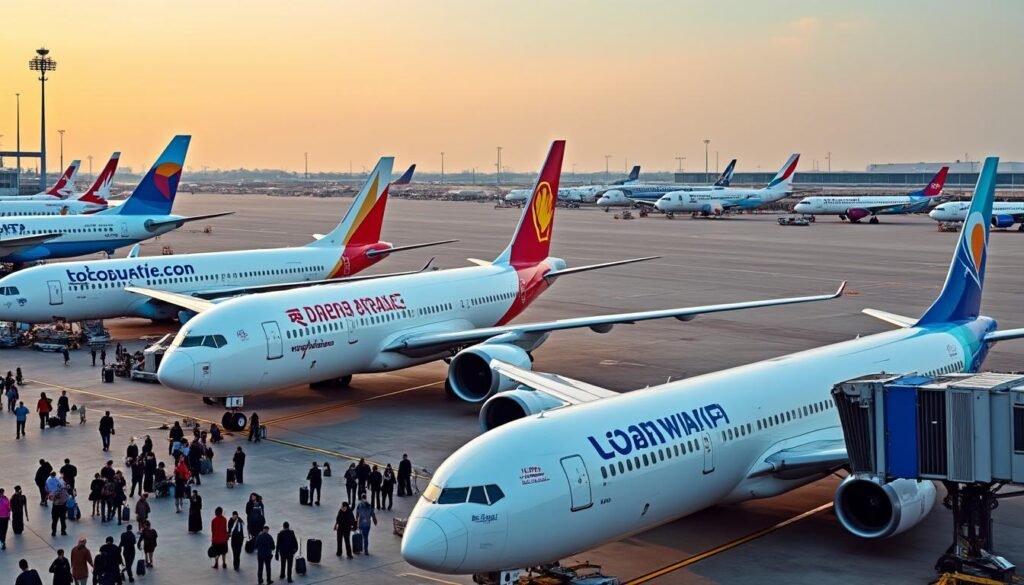

Ever wondered why a flight from New York to London can have a price tag that ranges from a modest dinner for two to a down payment on a small car? The answer lies far beyond simple supply and demand. The airline industry is a complex tapestry woven from vastly different business models, each meticulously designed to capture a specific slice of the market. It’s a world where operational efficiency battles with luxurious comfort, and where the choice of a secondary airport can save millions. From the all-inclusive embrace of a full-service carrier to the bare-bones approach of an ultra-low-cost airline, every aspect of the journey is a calculated decision. This exploration delves into the core differences that define these aerial behemoths. We’ll uncover the strategies behind their pricing, the logic of their networks, and even dissect the surprisingly significant nuances in their names—because in the high-stakes game of aviation, whether you’re an “Airline,” “Airlines,” or “Air Lines” can say more than you think.
In brief:
- Airlines are primarily categorized by their business models, the most common being Full-Service Carriers (FSCs) and Low-Cost Carriers (LCCs).
- Full-Service Carriers like Emirates or Vistara offer a comprehensive package with amenities like meals, checked baggage, and in-flight entertainment included in the ticket price. They typically operate on a hub-and-spoke network.
- Low-Cost and Ultra-Low-Cost Carriers, such as Ryanair and Spirit Airlines, provide a basic “no-frills” service, where passengers pay extra for all amenities. They focus on operational efficiency using point-to-point routes and single aircraft types.
- Other key types include Charter airlines, which operate on-demand for specific groups, and Regional airlines, which connect smaller cities to major hubs.
- The terminology an airline uses (e.g., “Airline,” “Airlines,” “Air Lines”) is a branding choice that can reflect its history, structure, or marketing strategy.
Demystifying the Full-Service Airline Model
Full-Service Carriers, often called FSCs or legacy carriers, are the titans of traditional air travel. When you book a flight with one of these airlines, the ticket price is more of an all-inclusive package. Think of carriers like Emirates, Qatar Airways, or Air India; the experience is built around providing a comprehensive and comfortable journey. This typically includes a checked baggage allowance, complimentary meals and beverages, and access to in-flight entertainment systems. They operate multiple cabin classes, from Economy to the plush comforts of Business and First Class, catering to a wide spectrum of travelers, particularly those on long-haul international routes.
The operational backbone of most FSCs is the hub-and-spoke network. This model is designed for maximum global reach. Instead of flying directly between every possible city pair, the airline funnels passengers through a large, central airport—the hub. From there, passengers connect to their final destinations on other flights, or “spokes.” This system allows them to serve a vast number of locations efficiently and invest heavily in passenger loyalty through robust frequent-flyer programs and premium lounge access.
What Defines a Hub-and-Spoke Network?
Imagine a bicycle wheel. The hub is the center, and the spokes radiate outwards. In aviation, an airline like Delta uses Atlanta (ATL) as a massive hub. A passenger traveling from a smaller city like Savannah to Seattle would likely fly first to Atlanta and then catch a connecting flight to their final destination. This structure enables the airline to consolidate passengers from many different origins onto a single, larger aircraft for the long-haul portion of the trip, which is highly efficient. While it provides incredible network coverage, the downside for the passenger can be longer travel times and the potential for missed connections if there are delays.
Exploring the World of Low-Cost and Ultra-Low-Cost Carriers
On the opposite end of the spectrum are the Low-Cost Carriers (LCCs) and their even more frugal cousins, the Ultra-Low-Cost Carriers (ULCCs). These airlines have revolutionized air travel by making it accessible to the masses. The philosophy is simple: you only pay for what you absolutely need. The base fare gets you a seat and a safe journey from A to B. Everything else is an optional extra. Want to choose your seat? That’s a fee. Bringing a bag larger than a backpack? That’s a fee. Thirsty for a soda? You’ll have to pay for it. Airlines like Air Asia, Ryanair, Spirit, and Frontier have mastered this unbundled, “à la carte” model.
Their success hinges on ruthless operational efficiency. They typically operate a single type of aircraft, like the Boeing 737 or Airbus A320, which dramatically simplifies maintenance, repairs, and pilot training. They also favor flying point-to-point routes, connecting cities directly without the complexity of a hub. This, combined with fast turnaround times on the ground, ensures their aircraft spend more time in the air generating revenue. It’s a high-volume, low-margin business that has reshaped the skies. There are different types of airlines to suit every traveler’s budget and preferences.
How Do Low-Cost Airlines Keep Prices So Low?
The secret to the LCC’s shockingly low fares isn’t magic; it’s a meticulously crafted business strategy focused on minimizing costs at every turn. Their approach is a masterclass in operational leanness.
- High Aircraft Utilization: LCC aircraft rarely sit idle. By achieving rapid turnarounds—often under 30 minutes—they can fit more flights into a single day than a traditional carrier.
- Unbundled Services: By charging for every extra, they keep the base fare incredibly low to attract customers, while generating significant ancillary revenue from those who choose to add services.
- Use of Secondary Airports: To avoid the high landing fees and congestion of major international airports, LCCs often fly into smaller, regional airports located further from the city center.
- Simplified Fleet: Operating just one or two aircraft models reduces costs associated with training crews, sourcing spare parts, and performing maintenance.
- Direct Sales Channels: The vast majority of tickets are sold directly through their own websites, bypassing the commissions paid to travel agents and online booking sites.
Beyond the Mainstream: Charter, Regional, and National Airlines
While FSCs and LCCs dominate the headlines, other specialized airlines play crucial roles in the aviation ecosystem. Charter airlines, for example, don’t operate on a fixed schedule. Instead, they are hired for specific trips, often by tour operators for holiday packages, corporations for events, or even sports teams. Their key advantage is flexibility in routes and timing, offering a bespoke travel solution for groups. Their business models are tailored to this on-demand market.
Regional and national airlines are the workhorses that connect smaller communities to the wider world. Carriers like Alaska Airlines or Hawaiian Airlines focus intensively on serving specific geographic regions. Many regional airlines also operate as feeders for major carriers, flying shorter routes under brands like “United Express” or “American Eagle.” These flights bring passengers from smaller airports to the major hubs, where they can connect to the global network of their larger partners.
Airline, Airlines, or Air Lines: Does the Name Matter?
Ever notice the subtle differences in company names? You have Emirates Airline, American Airlines, and Delta Air Lines. While it might seem like a trivial matter of grammar, it’s often a deliberate branding choice steeped in history and marketing. From a purely definitional standpoint, “airline” refers to a single organization providing air transport. In this sense, “Emirates Airline” is perfectly descriptive. It is one company.
The plural “Airlines” often reflects a company’s history, especially in the US, where many major carriers are the result of numerous mergers between smaller airlines over decades. The name “American Airlines” is a nod to this consolidated identity. Then there’s the more unique “Air Lines,” as used by Delta. This branding can be interpreted as the company providing many different routes or “lines” through the air between cities. While these distinctions may be lost on the average passenger, they matter immensely to the companies themselves. As an anecdote, it’s said that submitting a job application to Delta that refers to them as “Delta Airlines” is a surefire way to have your resume tossed aside for its lack of attention to detail.
What is the main difference between a low-cost and a full-service airline?
The primary difference lies in their pricing model. Full-service airlines bundle services like checked bags, meals, and seat selection into the ticket price. Low-cost airlines offer a base fare for the flight only and charge extra for every additional service, allowing for lower entry prices.
Why do some airlines use secondary airports?
Airlines, particularly low-cost carriers, use secondary airports to reduce operational costs. These smaller airports typically have lower landing fees, less air traffic congestion, and allow for quicker turnaround times on the ground compared to major international hubs.
Are charter flights cheaper than scheduled flights?
Not necessarily for an individual traveler. Charter flights are booked by a single entity (like a tour company) for a whole aircraft. The cost per person can be lower if the plane is full, but the primary benefit is the flexibility of choosing the route and schedule, rather than just the price.
What does ‘point-to-point’ network mean?
A point-to-point network involves flying aircraft directly between two cities without routing through a central hub. This model is commonly used by low-cost carriers as it is simpler to manage and can result in shorter travel times for passengers on that specific route.