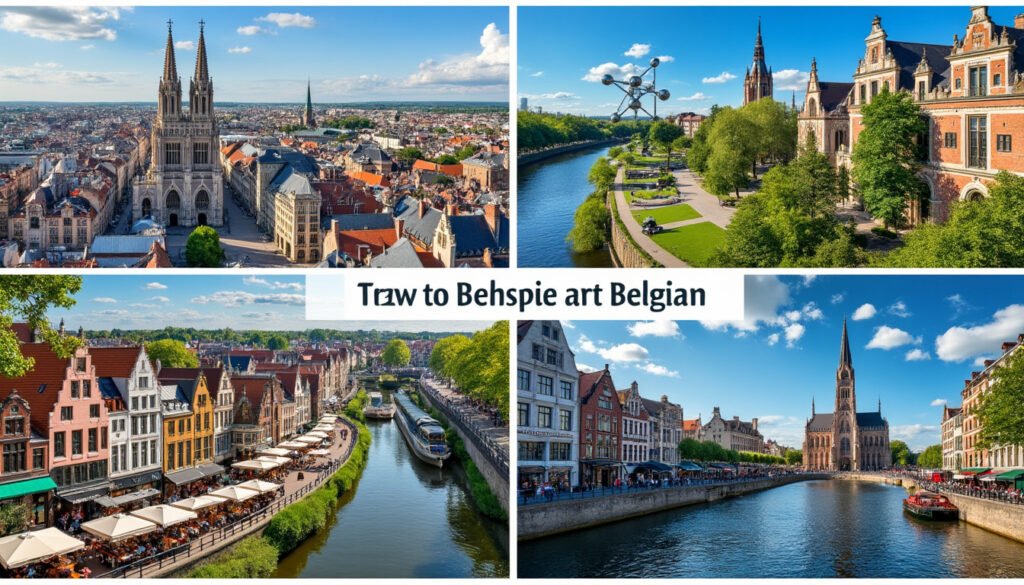

Often overlooked in favor of its more famous neighbors, Belgium is a country that packs a surprising punch. It’s a land where medieval belfries cast long shadows over bustling market squares, where the scent of waffles and double-fried frites hangs in the air, and where every cobblestone seems to whisper a story. While the famous trio of Brussels, Bruges, and Ghent are certainly worth the hype, they are merely the opening chapter to a much richer tale. This is a nation of contrasts, where the flat, polder-strewn landscapes of Flanders give way to the rolling, forested hills of the Ardennes. It’s home to more castles per square meter than anywhere else on Earth, a sobering collection of World War battlefields, and a beer culture so profound it’s recognized by UNESCO. Exploring Belgium is to discover a place where artistic legacy, from the Flemish Primitives to surrealist masters, is woven into the very fabric of daily life. It’s a compact country with a global mindset, offering a journey through history, art, and gastronomy that is as delightful as it is unexpected.
In Brief:
- Iconic Cities: Discover the fairytale canals of Bruges, the vibrant energy of Ghent, the cosmopolitan flair of Brussels, and the fashionable streets of Antwerp.
- Rich History: Step back in time at the battlefields of Flanders Fields and Waterloo, or explore the sites of the Battle of the Bulge in the Ardennes.
- Cultural Gems: Belgium boasts over 3,000 castles, historic abbeys producing world-famous Trappist beers, and unique UNESCO-listed beguinages.
- Natural Beauty: Hike through the dense forests of the Ardennes or explore the entire 67-kilometer coastline with the world’s longest tram line.
- Culinary Delights: Beyond the clichés, indulge in a sophisticated food scene, from Michelin-starred restaurants to cozy cafes serving local specialties.
The Great Flemish Art Cities: A Medieval Dream
The region of Flanders is home to a collection of cities that once stood as the commercial and cultural hearts of Europe. Today, their architectural splendor and artistic heritage continue to captivate visitors from around the world.
Bruges: The Fairytale Venice of the North
There’s a reason Bruges tops so many travel lists. With its meandering canals, cobblestone lanes, and perfectly preserved medieval architecture, the city feels like stepping into a storybook. It’s undeniably one of the most beautiful places in Belgium. Every corner reveals a photogenic scene, from the bustling Grote Markt dominated by its soaring belfry to the tranquil Minnewater, the “Lake of Love.” While it can get crowded, especially during peak season, ducking into a quiet side street often leads to a peaceful courtyard or a hidden chocolate shop. The city’s charm is best absorbed at a leisurely pace, perhaps on a canal boat tour or simply by wandering without a map.
Ghent: Where History Comes Alive
For a long time, Ghent remained in the shadow of its more famous neighbor, but travelers are now discovering this dynamic city that perfectly balances its rich history with a lively, modern culture. Once the second-largest city in Western Europe, its past is proudly displayed in the imposing Gravensteen castle and the stunning St. Bavo’s Cathedral. What sets Ghent apart is its vibrant, lived-in feel. As a major university city, its streets are full of locals, students, and a palpable energy. The Graslei and Korenlei quays, lined with historic guildhalls, are a spectacular sight, especially when illuminated at night.
Antwerp: The Cool and Confident Diamond
Antwerp exudes a confident, stylish air. Historically one of Europe’s most important commercial hubs during its 16th-century Golden Age, it remains a global center for the diamond trade. This history of wealth is reflected in the grand architecture of the historical center, particularly around the Grote Markt. Beyond its glittering reputation, Antwerp is a paradise for lovers of art, fashion, and food. It’s the city of Peter Paul Rubens, and his former home is now a fascinating museum. It’s also a legitimate fashion capital, with countless independent boutiques in the trendy Het Zuid district, and a foodie destination with everything from Michelin-starred restaurants to hip, creative eateries.
Brussels: The Diverse Heart of Europe
As the capital of Belgium and the de facto capital of the European Union, Brussels is a city of immense diversity and importance. While it may not have the picture-perfect uniformity of Bruges, its treasures are just as compelling. The Grand-Place is a UNESCO World Heritage site for a reason, often called the most beautiful square in the world with its opulent guildhalls and striking Town Hall. The city is a patchwork of distinct neighborhoods: the regal Royal Quarter, the artsy Sablon with its antique shops, the bustling EU Quarter, and the bohemian Marollen, home to a daily flea market. Brussels is a city to be explored through its food, its art nouveau architecture, and its quirky landmarks like the Manneken Pis.
Beyond the Metropolises: Charming Towns and Historic Sites
To truly understand Belgium, one must venture beyond the major cities. The country is dotted with smaller towns, historic sites, and hidden gems that offer a different, often more tranquil, perspective on Belgian life.
Leuven: A Scholarly and Spirited City
Often described as the “Oxford of Belgium,” Leuven is dominated by its university, one of the oldest in the world, founded in the 15th century. This gives the city a youthful, energetic vibe that complements its stunning historical core. The absolute showstopper is the City Hall, a masterpiece of Gothic architecture so ornate it looks like a jewel box. Leuven has all the charm of the more famous Flemish cities but with a fraction of the tourists, making it a delightful place to explore. It’s also a renowned beer city, being the historic home of the Stella Artois brewery.
Dinant: The Pearl of the Meuse River
Set against dramatic limestone cliffs with a formidable citadel perched high above, Dinant is an incredibly picturesque town in the Wallonia region. The view from the top of the citadel, accessible by cable car or a steep staircase, is worth the effort alone. A stroll along the river Meuse, with its colorful houses and riverside cafés, is a must. For the more adventurous, kayaking on the river offers a fantastic perspective of the town and the surrounding Ardennes landscape. Dinant is also famously the birthplace of Adolphe Sax, the inventor of the saxophone, a fact celebrated with quirky saxophone statues throughout the town.
A Journey Through Belgium’s Past
Known for centuries as the “Battlefield of Europe,” Belgium’s soil is steeped in history. From Roman times to the two World Wars, pivotal conflicts have shaped its landscape and its identity.
Flanders Fields and the Great War
The area around the city of Ypres, known as Flanders Fields, was the site of some of the most brutal fighting of World War I. The landscape is a poignant memorial, dotted with countless cemeteries, preserved trenches, and monuments. A visit here is a powerful and moving experience. Key sites include the John McCrae site, where the famous poem was written, and the trenches at Hill 62. Every evening at 8 PM, the Last Post ceremony is held under the Menin Gate in Ypres, a solemn tribute to the missing soldiers of the British Commonwealth that has taken place almost uninterrupted since 1928.
The Ardennes and the Battle of the Bulge
In the winter of 1944, the forests of the Ardennes became the stage for the Battle of the Bulge, the largest and bloodiest battle fought by the United States in World War II. The area around Bastogne is rich with reminders of this conflict. The Mardasson Memorial and the Bastogne War Museum offer comprehensive insights into the battle, while the nearby Bois Jacques still contains the original foxholes used by the 101st Airborne Division during the siege. Many travelers find this one of the best cities to visit in Belgium for its profound historical significance.
Essential Belgian Experiences to Add to Your List
To get a real taste of the country, make sure to try some of these authentic activities:
- Explore a Beguinage: These peaceful communities, once home to religious laywomen, are now UNESCO World Heritage sites found in cities like Bruges, Ghent, and Leuven.
- Go Castle-Hopping: With over 3,000 castles, you’re never far from one. Many, like the Gravensteen in Ghent or the Citadel of Namur, are open to the public.
- Cycle the Countryside: Rent a bike and explore the incredible network of well-marked cycling paths, including unique routes like “Cycling through the Trees” in Limburg.
- Visit an Abbey: Discover the serene world of Belgian abbeys, many of which still produce famous Trappist beers and cheeses, like those at Maredsous or Val Dieu.
- Attend a Local Festival: From the massive Gentse Feesten to the historic Carnivals of Binche and Aalst, festivals are a huge part of Belgian culture.
What is the best time of year to visit Belgium?
Spring (April to June) and early autumn (September to October) are ideal times to visit. The weather is generally pleasant, and the crowds are smaller than in the peak summer months of July and August. The Christmas market season in December is also a magical time to experience the cities.
How many days should I spend in Belgium?
A short trip of 3 to 4 days is enough to see one or two major cities like Brussels and Bruges. However, to truly explore the country’s diversity, including the Ardennes region and smaller towns, a 7 to 10-day itinerary is recommended.
Is it easy to get around Belgium without a car?
Yes, Belgium has an excellent and efficient train network that connects all major cities and many smaller towns. The country is small, so train journeys are typically short, making it very easy to base yourself in one city and take day trips to others.
What languages are spoken in Belgium?
Belgium has three official languages: Dutch (spoken in the northern Flanders region), French (spoken in the southern Wallonia region), and German (spoken in a small area in the east). In Brussels, both Dutch and French are official languages. English is widely spoken and understood, especially in tourist areas and by younger generations.